
close
Choose Your Site
Global
Social Media
Views: 0 Author: Site Editor Publish Time: 2026-09-30 Origin: Site


Achieving a true "clean laundry" scent requires balancing consumer expectations of freshness against harsh chemical realities. We often picture crisp linens drying outdoors in the sun. However, translating that mental image into a bottled formula is a complex scientific challenge. Surfactant bases possess strong inherent odors that require aggressive masking. Furthermore, these products feature high pH levels and face intense heat exposure during consumer wash and dry cycles. If your aromatic compounds cannot survive these hostile environments, the resulting product will fail to deliver the expected sensory experience.
We designed this guide to help formulators navigate these precise technical hurdles. Creating a successful laundry product means prioritizing stability just as highly as the olfactory experience. This guide provides formulators and brand owners an objective framework for evaluating, testing, and selecting the ideal aroma profiles. You will learn how to match specific aromatic technologies to detergents, softeners, and scent boosters to maximize consumer satisfaction.
Selecting a fragrance oil requires prioritizing base compatibility and pH stability over initial top-note impressions.
"Clean laundry" profiles typically rely on synthetic aldehydes, white florals, and white musks to mask chemical base odors and survive the wash cycle.
Application format dictates formulation: Standard liquid oils suit active detergents, while laundry microcapsule fragrance technology is required for extended scent release in softeners.
Procurement decisions must hinge on verifiable IFRA compliance documentation and strict batch-to-batch consistency.
Consumers hold highly specific, deeply ingrained associations when evaluating whether a garment smells "clean." Analyzing these expectations forms the baseline of your formulation strategy. Shoppers generally gravitate toward notes suggesting ozone, crisp linen, and sun-dried cotton. They expect a scent to project immediately upon opening the bottle, bloom during the wash cycle, and linger softly on folded clothes weeks later. Formulators must select a highly substantive fragrance oil to meet these demanding, multi-stage performance expectations.
Building a successful laundry scent requires a carefully engineered pyramid of notes. Each layer serves a specific functional purpose during the product's lifecycle.
Top notes: Synthetic aldehydes dominate this layer. They provide the crucial "fresh air" snap and immediate lift consumers expect. Citrus and ozone accords often support aldehydes to create a bright, penetrating initial impression.
Mid notes: White florals, such as jasmine, lily of the valley (muguet), and peony, provide the necessary body. These mid notes bridge the sharp top notes and the heavier base, rounding out the profile so it smells pleasant rather than purely chemical.
Base notes: White musk and subtle woods anchor the formula. These heavier molecules ensure fabric retention. They possess the highest substantivity, meaning they cling to textile fibers and survive the aggressive heat of the dryer.
You cannot evaluate an aroma in isolation. Unfragranced surfactant blends often carry harsh, fatty, or sulfurous base odors. A successful olfactory profile must actively mask these chemical realities. Before finalizing a scent, you must evaluate how it interacts directly with your unfragranced base. Certain floral notes can turn sour when mixed with specific anionic surfactants. We recommend testing several variations of a scent profile to identify which one neutralizes your specific base odor most effectively without requiring excessive dosing limits.
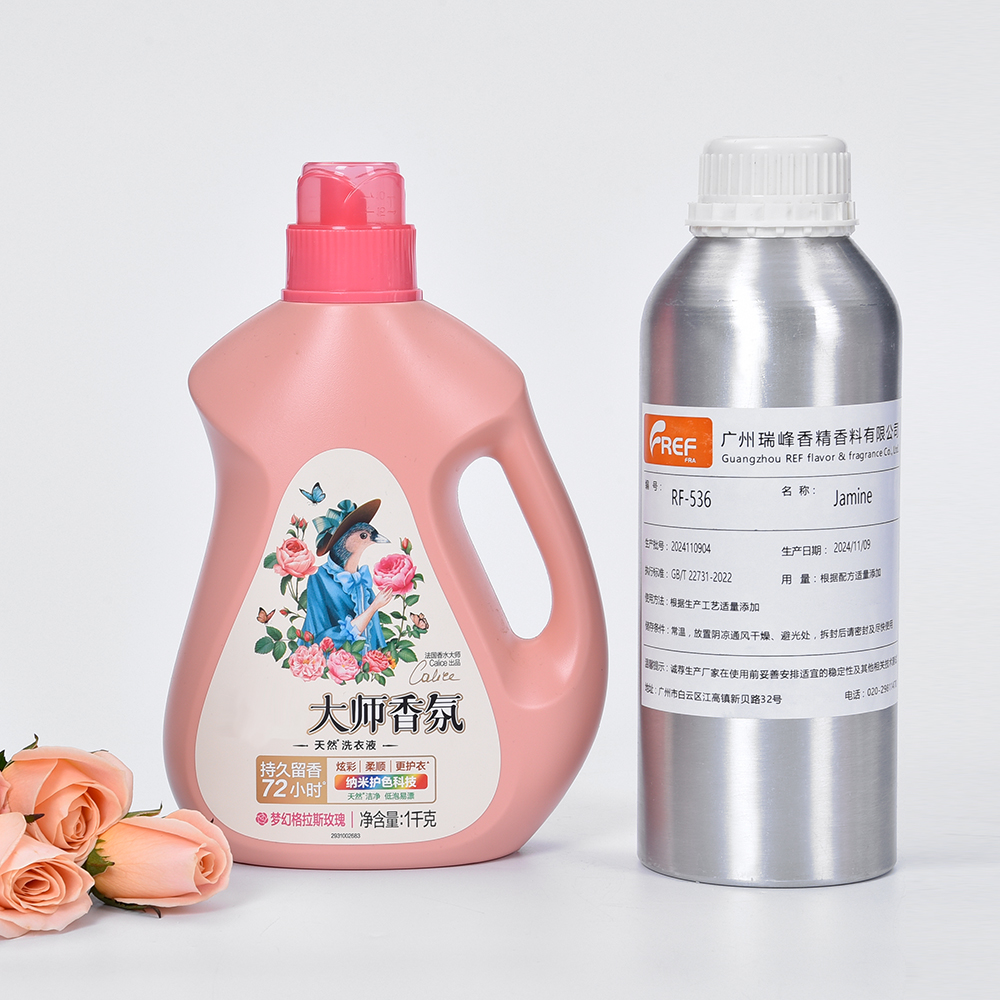
Even the most beautiful scent profile becomes useless if it breaks down inside the bottle. Formulators must subject every potential Laundry Detergent Fragrance Oil to rigorous stability testing. This phase determines whether the product can survive global supply chains, fluctuating warehouse temperatures, and extended shelf life expectations.
Laundry detergents typically operate in highly alkaline environments, often resting between a pH of 8.0 and 10.5. These conditions aggressively attack delicate aroma molecules. Esters, for example, easily undergo hydrolysis in alkaline water, destroying the scent completely. You need guidelines for assessing how an oil holds up under these conditions without breaking down. A stable oil will maintain its character and avoid accelerating product separation over time. Always request alkaline-stable synthetic molecules from your supplier.
Formulators often encounter unwanted color shifting during stability testing. The impact of vanillin and specific floral synthetics (like indole) causes products to turn yellow or brown over time. This discoloration ruins consumer perception, especially in premium product lines. Testing in clear versus opaque PET packaging is entirely necessary. Clear packaging exposes the formula to UV light, which rapidly accelerates discoloration and degradation. If your brand uses clear bottles, you must incorporate UV stabilizers and strictly limit the use of known discoloring agents.
Adding scent to a detergent base can drastically alter its physical consistency. Assessing the risk of oils thinning or thickening the base during the mixing phase remains a critical step. Aromatic compounds interact directly with the salt curves of surfactant systems. An improperly matched oil can cause a thick gel to collapse into a watery liquid instantly. Conversely, it might cause the batch to seize and become too thick to pump. Small-scale bench testing prevents costly manufacturing disasters.
You must verify shelf-life claims before scaling production. Standard oven testing accelerates the aging process, allowing formulators to predict long-term stability in a fraction of the time.
Accelerated Stability Testing Protocol
Environmental Condition | Duration | Testing Frequency | Key Observation Metrics |
|---|---|---|---|
Oven (40°C / 104°F) | 12 Weeks | Weekly | Odor character, discoloration, separation. |
Freeze-Thaw (-10°C to 25°C) | 3 Cycles | After each cycle | Phase separation, cloudiness, viscosity recovery. |
UV Light Chamber | 4 Weeks | Weekly | Color fading, yellowing, PET bottle integrity. |
Room Temp Control (25°C) | 52 Weeks | Monthly | Baseline comparison for all accelerated data. |
The chemical makeup of your final product determines which aromatic delivery system you must use. Treating detergents and softeners interchangeably represents a common formulation mistake. Different products require entirely different mechanisms to deliver a lasting impression.
Standard liquid formats consist of free-flowing aromatic compounds. These represent the traditional approach to scenting household cleaners.
Best for: Liquid or powder detergents and immediate-impact products. They perform exceptionally well during the wash cycle, filling the consumer's laundry room with a blooming scent.
Limitations: The scent flashes off quickly in the dryer. The high heat easily volatilizes unprotected aroma molecules. Consequently, standard liquid formats offer limited residual fabric retention once the clothing is folded and stored.
Consumers increasingly demand "long-lasting freshness" that survives the dryer and remains active in the closet. Meeting this demand requires advanced polymeric delivery systems. A Fabric Softener Fragrance relies heavily on cationic compatibility and deposition technologies.
Mechanism: A Laundry Microcapsule Fragrance works by trapping the aromatic oil inside microscopic polymeric shells. During the wash, these capsules deposit onto the fabric fibers. Later, the shells break upon physical friction—such as wearing the garment or rubbing a towel—releasing bursts of aroma.
Best for: Softener applications and concentrated in-wash scent booster beads. The cationic nature of softeners aids in the deposition of these capsules onto negatively charged cotton fibers.
Evaluation criteria: Formulators must balance shell durability during formulation against friability on dried fabric. If the shell is too weak, it bursts in the detergent bottle. If the shell is too strong, it will not break when the consumer wears the clothing, trapping the scent inside permanently.
Regulatory compliance is non-negotiable. The International Fragrance Association (IFRA) establishes strict safety standards protecting consumers from dermal sensitization and toxicity. Formulators must strictly adhere to these globally recognized guidelines to avoid product recalls and liability.
Laundry products generally fall under specific regulatory categories depending on their usage. Formulators must navigate IFRA Category 10A, which governs household cleaning products like standard detergents. You must also understand Category 12, which covers products experiencing minimal skin contact or functioning primarily as air care. The maximum allowable dosage of your chosen aromatic blend fluctuates significantly based on these precise category definitions. Using a Category 12 limit for a Category 10A product can trigger severe compliance violations.
Certain aromatic molecules naturally act as skin sensitizers. Managing the maximum usage limits for known sensitizers like Limonene, Linalool, and Citral remains a daily responsibility for formulators. Exceeding these limits risks causing allergic contact dermatitis in your consumer base. Furthermore, formulators must comply with regional Volatile Organic Compound (VOC) restrictions. Regions like California enforce strict VOC limits to curb air pollution. Your chosen formula must balance strong olfactory projection while remaining safely below the legal VOC threshold.
Trust, but verify. Never source materials without a current Certificate of Analysis (COA) confirming the quality of your specific batch. You must maintain a Safety Data Sheet (SDS) outlining proper handling, storage, and emergency procedures. Finally, always demand an IFRA compliance certificate specific to the exact formulation batch. This certificate proves the mixture conforms to the latest amendment standards and clearly outlines the maximum safe usage levels for your product category.
Transitioning from a successful benchtop prototype to mass production requires reliable supply chain partners. Evaluating vendors involves much more than finding an appealing scent; it requires assessing their technical capabilities and logistical reliability.
Look for suppliers who offer application-specific testing data rather than just generalized scent descriptions. A reliable vendor will provide data showing how their formulas perform specifically in high-alkaline bases or cationic softener environments. Avoid suppliers who only sell general-purpose craft oils, as these rarely possess the chemical robustness required for industrial laundry applications. True partners offer technical support, troubleshooting formulation issues alongside your internal R&D team.
Establishing a rigorous evaluation protocol ensures objective decision-making.
Never evaluate solely on a blotter strip: Smelling an oil on a paper strip tells you nothing about how it survives a wash cycle. Base masking and high-heat survival cannot be simulated on paper.
Conduct full wash-and-dry cycle tests: Apply your fragranced base to standardized cotton and synthetic swatches. Synthetics like polyester retain scent entirely differently than natural cotton fibers. Evaluate the damp cloth out of the washer (the "wet bloom") and the dry cloth out of the dryer (the "dry retention").
You must balance initial R&D sample availability with the supplier's Minimum Order Quantity (MOQ). A vendor offering small lab samples might demand massive bulk drum commitments that strain early-stage production capabilities. Discuss lead times for production-scale drums early in the conversation to ensure they can scale alongside your brand's growth without causing out-of-stock scenarios.
Once you identify a promising prototype, begin requesting technical data sheets. From there, arrange blind olfactory panel testing with your target demographic. Blind testing removes brand bias, ensuring the scent profile genuinely resonates with consumers before you invest in large-scale manufacturing runs.
Successful laundry scent formulation bridges subjective perfumery with objective chemical stability. You cannot rely on a pleasant aroma alone; the selected molecules must survive highly alkaline environments, mask harsh surfactant odors, and endure extreme dryer heat without degrading. Prioritizing stability testing prevents costly manufacturing issues like discoloration, viscosity collapse, and scent fading.
Moving forward, align your delivery format with your product type. Utilize standard liquid formats for active detergents and leverage encapsulation technology for softeners requiring long-term fabric retention. Always secure up-to-date IFRA documentation to guarantee consumer safety and regulatory compliance. We encourage you to reach out to a trusted supplier today to request a formulation sample or download a technical specification sheet to begin your stability testing.
A: The usage typically ranges from 0.5% to 2.0%. The exact percentage depends on the base concentration, the desired scent throw, and strict IFRA safety limits. Concentrated formulas may require higher dosing to maintain projection.
A: Standard oils evaporate under high heat. Achieving post-dryer scent retention requires heavier base notes, like musks and woods, which possess higher substantivity. Alternatively, transitioning to an encapsulated microcapsule technology protects the scent through the drying phase.
A: Generally no. Fabric softeners require specific cationic compatibility. They also frequently rely on advanced encapsulation technologies designed to break upon physical friction. Standard candle or soap oils lack these specific delivery mechanisms and will simply wash away in the rinse cycle.
A: Preventing separation involves conducting proper HLB (Hydrophile-Lipophile Balance) matching. You may need to incorporate polysorbates or specific solubilizers. Additionally, adjusting your mixing temperatures and shear rates during production ensures a stable, uniform emulsion.
