
close
Choose Your Site
Global
Social Media
Views: 0 Author: Site Editor Publish Time: 2026-07-18 Origin: Site


Formulating heavy-duty cleaning products presents a distinct chemical challenge on the production floor. Achieving high cleaning efficacy often requires an alkaline environment with a pH between 9 and 12. This harsh base is inherently hostile to volatile aroma compounds. Unstable fragrances in high-pH bases lead to rapid degradation of top notes. You get off-odors, harsh chemical smells, and unexpected discoloration in the final mix. These issues ultimately drive consumer rejection and product returns.
Balancing surfactant efficacy with scent longevity requires strategic formulation. You must utilize specialized daily chemical fragrances, effective fixatives, and advanced encapsulation techniques. Protecting the scent profile ensures the product performs well and maintains structural integrity from the mixing tank to the laundry room. Formulators must move away from delicate natural extracts and rely on engineered synthetics that can survive extreme alkalinity without fracturing.
High-pH environments accelerate hydrolysis and oxidation, requiring the use of alkali-resistant synthetic aroma chemicals rather than highly volatile natural essential oils.
Integrating chemical fixatives (like Dipropylene Glycol - DPG) equalizes vapor pressure, significantly extending the longevity of the fragrance profile.
Advanced delivery systems, such as microencapsulation, protect delicate notes (e.g., lavender laundry fragrance) from alkaline degradation until consumer use.
Manufacturing sequence matters: adjusting the pH of the base *before* introducing the fragrance minimizes immediate chemical shock and structural breakdown of the scent profile.
Optimizing scent "substantivity" ensures the fragrance deposits effectively onto surfaces or fabrics instead of washing down the drain.
A successful cleaning product requires a stable fragrance profile that survives prolonged storage. The industry baseline targets a shelf life of 12 to 24 months. During this period, the product must show no olfactory degradation or visual shifts. Achieving this requires understanding exactly how alkaline environments attack aroma molecules at the structural level.
Alkaline hydrolysis, commonly known as saponification, actively destroys specific fragrance components. Aldehydes, esters, and certain ketones are highly vulnerable. When exposed to a pH above 9, the ester bonds cleave. For example, a common ester will break down into an alcohol and a corresponding acid salt. This reaction permanently alters the scent. High pH causes rapid evaporation and structural breakdown. You lose lighter molecular weight compounds within days of mixing the batch.
Formulators must also account for chemical shock during the compounding phase. Sudden exposure to highly alkaline media permanently alters the olfactory profile. If you drop delicate oils directly into a harsh base containing unneutralized sodium hydroxide, the scent immediately fractures. The top notes flash off, leaving only the heavy, sometimes unpleasant base notes behind. This is why dumping fragrance into a hot, highly alkaline tank results in an immediate loss of yield.
Initial Flash-Off: Highly volatile top notes evaporate immediately upon contact with hot, alkaline bases.
Hydrolytic Cleavage: Esters break down into odorless or off-smelling byproducts within the first 48 hours.
Schiff Base Formation: Aldehydes react with amines in the formula, causing severe color shifts.
Polymerization: Certain terpenes polymerize, leading to cloudiness and loss of olfactory impact.
Natural oils oxidize much faster in alkaline bases. This oxidation leads to browning, yellowing, or turbidity in transparent liquid formulas. A clear liquid detergent can turn a murky brown within weeks if the wrong oils are used. Citrus oils containing high levels of limonene are particularly notorious for oxidizing into peroxides, which smell like turpentine and cause severe yellowing.
Functional ingredient interactions further complicate stability. Fragrances often react with active oxygen bleaches or alkaline builders like sodium silicate. Harsh anionic surfactants can also strip the scent molecules. These chemical clashes destroy the fragrance and can compromise the cleaning efficacy of the base. When a fragrance molecule reacts with an active bleach, both the scent and the bleaching power are neutralized.
Chemical Class | Vulnerability in High pH | Common Result |
|---|---|---|
Esters | High (Hydrolysis) | Loss of fruity/floral notes, off-odors |
Aldehydes | High (Oxidation/Aldol Condensation) | Severe yellowing, loss of top notes |
Alcohols | Low to Moderate | Generally stable, good for heavy-duty bases |
Ethers | Low | Highly stable, excellent retention |
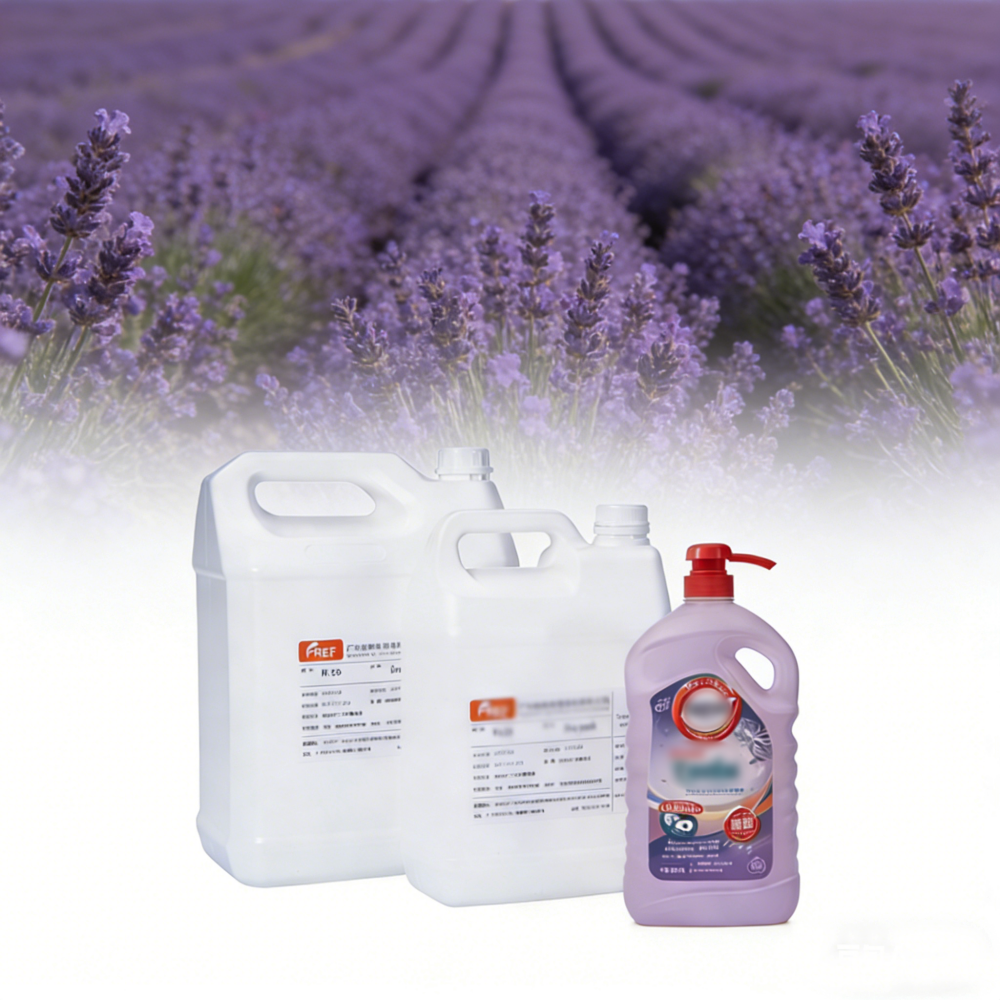
Selecting the right aroma compounds is the first line of defense in formulation. Standard fragrance oils fail in heavy-duty cleaners. You must evaluate and select alkali-stable synthetic compounds designed specifically for harsh environments. Relying on off-the-shelf oils meant for neutral pH lotions will result in batch failures.
Choosing synthetics over naturals is mandatory for heavy-duty cleaners. Natural essential oils contain hundreds of trace compounds. Many of these trace elements degrade instantly in high pH. Synthetic daily chemical fragrances offer higher molecular weights. They possess lower volatility and strong resistance to alkaline hydrolysis. By isolating the specific molecules that provide the desired scent and synthesizing them to resist high pH, formulators eliminate the unstable trace elements found in naturals.
For example, natural lemon oil contains dozens of terpenes that oxidize rapidly. A synthetic lemon profile built with stable nitriles and ethers will maintain its crisp scent in a pH 11 degreaser for over a year. This predictability is essential for large-scale manufacturing.
Fragrance loss during rinse cycles is a major challenge. This is known as the "washing down the drain" problem. If the scent does not stick to the fabric, the consumer perceives the product as ineffective. Substantivity refers to a molecule's physical affinity for a surface, often measured by its Log P value (octanol-water partition coefficient).
Choosing raw materials with high fabric and surface affinity ensures long-lasting performance. High substantivity molecules are highly hydrophobic. They resist being washed away by surfactants. Instead of staying in the wash water, they deposit onto the fibers and release slowly over time as the fabric dries.
Consider the formulation of a lavender laundry fragrance. Natural lavender relies heavily on Linalyl Acetate for its characteristic sweet, herbal profile. This ester is highly unstable in high pH and breaks down quickly into Linalool and acetic acid, ruining the scent. To build a stable profile, formulators replace it with alkali-stable synthetic alternatives.
Tetrahydrolinalool or Dihydro Myrcenol serve as excellent replacements. These synthetics maintain the authentic, fresh lavender profile. They ensure chemical resilience in the bottle and during the wash cycle. The result is a consistent scent that survives the alkaline base and deposits effectively onto the fabric.
Technical mechanisms exist to lock in scent and prevent premature evaporation. Analyzing these evaluation dimensions helps R&D teams build robust products that maintain their olfactory impact from the factory to the end user.
Fixatives stabilize the overall composition. They equalize the vapor pressures of different volatile facets. This slows down the evaporation rate of the lighter top notes. Synthetic musks, such as Galaxolide, and specific resins act as powerful anchors in liquid formulas. They bind the lighter citrus and floral notes, preventing them from flashing off immediately upon opening the bottle.
Dipropylene Glycol (DPG) plays a critical role here. DPG is a highly viscous, odorless solvent. It functions as an exceptional fixative that anchors volatile top notes at high concentrations. It prevents the scent from flashing off when the bottle is opened. By dissolving the fragrance in DPG before adding it to the main batch, formulators can significantly improve the retention of top notes.
Evaluating the return on investment for encapsulated fragrances is essential for modern formulations. Free oils provide the immediate scent out of the bottle. However, they often wash away during the rinse cycle. Using an encapsulated laundry detergent fragrance solves this issue by physically protecting the oil.
Polymeric shell walls, often made of melamine formaldehyde or polyurea, protect the fragrance core from the alkaline surfactant matrix. The scent remains trapped during the wash and rinse cycles. It only releases upon mechanical friction. When the consumer wears or rubs the washed garment, the shell breaks, delivering a burst of fresh scent weeks after washing.
Melamine Formaldehyde Shells: Highly durable, excellent for heavy-duty liquid detergents.
Polyurea Shells: Good balance of friability and stability, often used in fabric softeners.
Core-to-Wall Ratio: Adjusting this ratio determines how easily the capsule breaks upon friction.
Slurry Integration: Capsules are added as an aqueous slurry at the very end of the mixing process to prevent shear damage.
Operational best practices dictate the manufacturing sequence. You must adjust the formula's final pH prior to introducing the fragrance phase. Adding delicate oils to an unadjusted, highly alkaline base causes immediate chemical shock. Always neutralize your sulfonic acids and adjust your final pH with citric acid or sodium hydroxide before dosing the scent.
Temperature controls during mixing are equally important. Always add the fragrance when the batch is below 40°C. High temperatures cause thermal degradation and flash-off of volatile notes. Proper sequencing and temperature control preserve the structural integrity of the scent. If you add fragrance at 60°C, you will lose up to 30% of your top notes through the exhaust vents.
Selecting the right fragrance partner influences the overall value of the final product. R&D and procurement teams must weigh conceptual trade-offs during vendor evaluation. You need suppliers who understand the harsh realities of high-pH chemistry.
Strict documentation is non-negotiable. You must request IFRA certificates and Safety Data Sheets (SDS) from suppliers. More importantly, demand specific high-pH stability testing data. The supplier must prove compatibility in the pH 9-12 range before you begin pilot testing. Ask for 12-week stability data at 40°C in an uncolored base to verify there is no yellowing or olfactory shift.
Document/Data Required | Purpose in Formulation |
|---|---|
IFRA Certificate | Ensures regulatory compliance and safe usage levels. |
40°C Stability Data (12 Weeks) | Proves the scent will not degrade or discolor in high pH. |
Log P Values | Indicates substantivity and fabric deposition potential. |
Allergen Declaration | Required for consumer labeling and safety warnings. |
Procurement must analyze cost-in-use. Is it more cost-effective to use a higher dosage of a standard fragrance? Or should you use a lower dosage of a premium, alkali-stable fragrance? Usually, a lower dosage of an engineered, encapsulated scent provides better longevity and consumer satisfaction. Pumping 2% of a cheap, unstable oil into a formula is a waste of money if it degrades in two weeks. Using 0.5% of a highly stable, engineered synthetic yields better long-term results.
Commercial scale-up introduces common points of failure. Identifying these implementation risks early prevents costly batch rejections. Moving from a 1-liter beaker to a 10,000-liter mixing tank changes the shear rates, cooling times, and exposure durations.
Robust testing protocols validate the formulation before full-scale production. Standard parameters include holding samples for 4 weeks at 40°C or 45°C. You must also run freeze-thaw cycles and UV exposure tests to simulate shipping and warehouse conditions.
Define strict metrics for success. The samples must show no phase separation. The color must remain consistent without yellowing. Finally, a trained panel must evaluate olfactory consistency to ensure the top notes have not degraded. Compare the aged sample against a refrigerated control sample to accurately gauge the shift.
Oven Testing: Store samples at 45°C for 4 to 12 weeks to accelerate hydrolysis.
Freeze-Thaw Cycles: Cycle samples between -10°C and 25°C to check for emulsion breakdown.
UV Exposure: Place samples in a light box to check for photo-oxidation and color shifts.
Viscosity Monitoring: Measure viscosity weekly to ensure the fragrance is not thinning the base.
Fragrance oils can unexpectedly thin, thicken, or cloud high-pH surfactant systems. This happens when the oils disrupt the surfactant micelle structure. A perfectly clear base can turn milky the moment the scent is added. This is a common issue when using highly lipophilic fragrance compounds in a base with low free-surfactant capacity.
Mitigation requires adjusting the base formulation. You may need to tweak salt levels (sodium chloride) to restore viscosity. Adding hydrotropes like Sodium Xylene Sulfonate (SXS) or solubilizers like PEG-40 Hydrogenated Castor Oil helps incorporate the oils properly. This restores product transparency without compromising cleaning power.
Surviving high-pH environments requires abandoning delicate natural extracts. Formulators must rely on scientifically engineered, alkali-stable synthetic aroma chemicals. Proper manufacturing sequencing and robust fixative systems are critical for success on the production floor.
Final formulation approval depends on strict criteria. You need proven stability in accelerated testing and high fabric substantivity. Cost-in-use feasibility and consumer-tested longevity dictate the final choice for commercial rollout.
Request alkali-stable fragrance samples from your suppliers with proven 12-week stability data.
Initiate 4-week accelerated stability tests on your current bases using the new synthetic compounds.
Adjust your pH mixing protocols in the pilot plant to ensure fragrance is added below 40°C.
Consult with vendors on custom encapsulation options to maximize scent retention on dry fabrics.
A: Most standard oils degrade above pH 8.5. Specialized alkali-stable daily chemical fragrances are required for formulations in the pH 9–12 range.
A: They use high-molecular-weight, low-volatility compounds to equalize vapor pressures across all fragrance facets. This slows down the evaporation rate of volatile top notes in the bottle and during product use.
A: Alkaline hydrolysis breaks down the fragrance esters. This destroys the intended scent profile and exposes the harsh, chemical base odor of the raw surfactants.
A: Yes, DPG is highly stable, viscous, and virtually odorless. This makes it an excellent carrier and fixative that prevents the flash-off of delicate scent notes in alkaline environments.
A: It is highly discouraged due to rapid oxidation, potential discoloration, and complete loss of scent profile. Synthetic daily chemical fragrances are the industry standard for high-pH stability.
A: Free fragrance provides the immediate "out-of-the-bottle" scent experience. Encapsulated laundry detergent fragrance survives the wash and rinse cycles to provide long-lasting, friction-activated scent on dry fabrics.
A: This indicates compatibility issues where the fragrance oils disrupt the surfactant micelle structure. It requires the addition of hydrotropes or solubilizers to restore formula transparency.
