
close
Choose Your Site
Global
Social Media
Views: 0 Author: Site Editor Publish Time: 2026-07-16 Origin: Site


Selecting a fragrance for commercial consumer goods extends far beyond olfactory preference. It is a complex chemical engineering challenge where the wrong choice can compromise an entire product line. Formulators frequently encounter critical failures when introducing aromatic compounds into reactive chemical bases. These failures include viscosity loss, phase separation, discoloration, and scent degradation. Surfactants, extreme pH solutions, and emulsions all present unique hurdles for scent integration.
To prevent costly formulation failures and ensure consistent consumer experiences, product managers and chemists must evaluate aromatic compounds through a strict framework. This evaluation requires a deep understanding of chemical compatibility, raw ingredient composition, regulatory compliance, and rigorous stability testing. You will learn how to navigate these technical requirements and select the optimal aromatic compounds for your specific product base.
Base Compatibility Dictates Selection: A fragrance's performance is entirely dependent on its chemical environment; what works in an alcohol base will often fail in a high-pH surfactant system.
Scent Composition Influences Stability: Understanding the core chemical building blocks of a daily chemical fragrance (e.g., aldehydes, esters, terpenes) is essential to predicting raw material interactions with the product base.
Stability Testing is Non-Negotiable: Accelerated aging, thermal cycling, and UV exposure tests are mandatory to predict how a daily chemical fragrance will behave over a product's shelf life.
Compliance Precedes Formulation: Sourcing must begin with International Fragrance Association (IFRA) compliance, Safety Data Sheets (SDS), and allergen declarations specific to the product's end-use category.
Cost-in-Use Outweighs Price-Per-Kilo: Evaluating the true ROI of a fragrance requires analyzing the required dosage to achieve the target scent throw without destabilizing the base.
Defining success in fragrance integration requires strict parameters. A successful formulation maintains stable viscosity, clear appearance, and a consistent scent profile over a 12 to 24-month shelf life. Achieving this baseline demands a thorough understanding of the chemical environment. The polarity, pH level, and active ingredients of a product base directly interact with the volatile organic compounds found in aromatic mixtures. You cannot simply drop an oil into a vat of surfactants and expect it to remain stable. The base acts as a solvent, a reactant, or a hostile environment depending on its chemical makeup.
Core raw materials used in perfumery behave differently under varying chemical stresses. Synthetic musks, aldehydes, natural essential oils, and functional esters each carry distinct reactive properties. When you introduce these compounds into a reactive base, the potential for instability increases exponentially. Formulators must anticipate how these building blocks will respond to the surrounding chemical matrix. For example, esters often hydrolyze in high pH environments, breaking down into their constituent acids and alcohols, which completely destroys the intended odor profile and often introduces a sour off-note.
Common formulation failures often stem from predictable chemical reactions. Schiff base reactions cause severe discoloration, typically turning products yellow or brown. This occurs when aldehydes react with nitrogen-containing compounds like amines or proteins. Viscosity shifts represent another major challenge. Surfactant systems may thin out or thicken unexpectedly due to the solvent effects of fragrance carrier oils such as dipropylene glycol or isopropyl myristate. Phase separation is equally problematic. Clouding, precipitation, or splitting happens in aqueous solutions and emulsions when the solubility limits of the fragrance are exceeded.
Chemical Group | Common Examples | Base Interaction Risks | Ideal Product Base |
|---|---|---|---|
Aldehydes | Vanillin, Benzaldehyde | Schiff base reactions (browning) with amines; oxidation. | Neutral pH, non-amine systems. |
Esters | Benzyl acetate, Linalyl acetate | Hydrolysis in extreme pH, leading to scent degradation. | Mildly acidic to neutral bases (pH 5-7). |
Terpenes | Limonene, Pinene | Oxidation, poor solubility in water, potential sensitization. | Solvent bases, heavy-duty cleaners. |
Synthetic Musks | Galaxolide, Tonalide | Generally stable, but can cause clouding in clear systems. | Emulsions, opaque surfactant systems. |
Understanding these interactions allows chemists to preemptively eliminate incompatible oils. If you are formulating a hair conditioner containing quaternary ammonium compounds, you already know that certain aldehydes will cause the white cream to turn beige over time. You must communicate these base constraints to your supplier so they can construct a formula using alternative molecules that provide a similar olfactory experience without the reactive downsides.
Viscosity disruption is perhaps the most frequent complaint from the compounding floor. A perfectly thick shampoo base can turn to water the moment the fragrance is added. This happens because the aromatic compounds insert themselves into the surfactant micelles, altering their shape and packing density. Sometimes, adding a small amount of salt (sodium chloride) can recover the viscosity, but often, the formula requires a complete rework of the surfactant ratio or the selection of a different aromatic blend entirely.
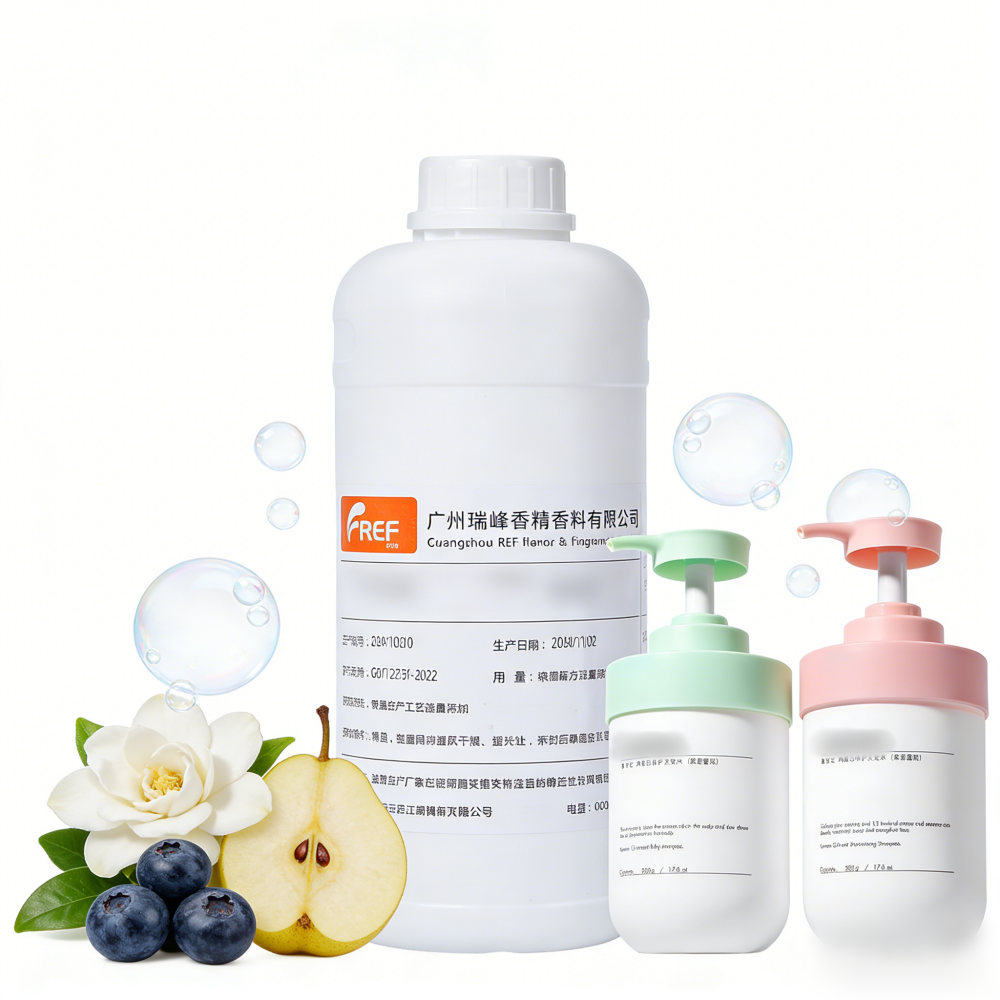
Shampoos, body washes, and liquid detergents require high solubility and micelle compatibility. The chosen daily chemical fragrances must resist wash-off to provide lasting value. Formulators evaluate bloom, which is the scent released when diluted with water during use. They also measure dry-down retention, which determines the scent left on skin or fabric fibers after rinsing. Achieving a strong bloom requires highly volatile top notes that flash off when exposed to warm water, while dry-down relies on substantive base notes like musks and woods that physically adhere to keratin or cotton fibers.
When working with clear surfactant systems, clarity is paramount. Many aromatic oils contain lipophilic compounds that refuse to solubilize in water-heavy formulas. This results in a hazy or cloudy appearance. To resolve this, formulators often use solubilizers like Polysorbate 20 or PEG-40 Hydrogenated Castor Oil. However, adding solubilizers increases the raw material cost and can depress the foam profile of the finished product. The ideal solution is sourcing an aromatic blend specifically engineered for high solubility in aqueous environments.
Lotions, skincare products, and hair conditioners rely heavily on lipid compatibility. The fragrance must stabilize within the emulsion droplets without causing separation. Minimizing skin sensitization is critical in these leave-on applications. There is a rising demand for a clean scent fragrance profile that aligns with hypoallergenic, paraben-free, or sensitive-skin product claims. Leave-on products keep the aromatic compounds in direct contact with the skin for hours, making allergen profiles a primary concern during the selection process.
Emulsion stability is a delicate balance of oil, water, and emulsifiers. Aromatic oils add to the total lipid phase of the formula. If the emulsifier system is not robust enough to handle this additional oil load, the lotion will eventually separate, showing a layer of oil at the top of the bottle. You must test the specific gravity and polarity of the aromatic blend to ensure it matches the continuous phase of your emulsion.
Acidic cleaners, chlorine bleach, and alkaline depilatories demand extreme chemical stability. Formulators must identify fragrance molecules that resist oxidation and hydrolysis. Saturated ethers and specific nitriles often perform well in these harsh conditions. The primary goal is masking harsh chemical base odors without degrading the active cleaning or bleaching agents. Bleach, in particular, will destroy most organic molecules, turning them into odorless, inactive byproducts within days.
Formulating for extreme pH requires a highly restricted palette of raw materials. You cannot use standard floral or fruity blends. Instead, you rely on robust synthetic molecules designed specifically for industrial applications. When testing these blends, you must monitor the active ingredient concentration over time. If a scent smells great but causes the sodium hypochlorite level in your bleach to drop by 50% in a month, the formulation is a failure.
Sanitizers, fine fragrance dilutions, and aerosol air fresheners introduce flashpoint considerations. These metrics are vital for safe plant manufacturing, storage, and transport. Managing evaporation curves is essential in highly volatile solvent mediums. Formulators must balance projection and longevity across top, heart, and base notes under varied environmental temperatures. Alcohol bases are generally the easiest to fragrance from a solubility standpoint, but they present significant regulatory and safety challenges.
Aerosol products require compatibility with propellants like butane, propane, or compressed air. The aromatic oil must remain completely miscible with the propellant and the solvent base under high pressure. Any precipitation inside the aerosol can will clog the valve, rendering the product useless. Furthermore, the particle size of the spray dictates how the scent is perceived in the air. Smaller particles provide better room fill but evaporate faster, requiring a careful balance of heavy and light molecules in the formulation.
Establishing strict laboratory standards prevents compounding errors. Use highly accurate analytical scales with 0.01g precision and clean, inert glass containers. Maintain detailed formulation logbooks to track every variable. Record batch numbers, exact mass measurements, ambient temperatures, and immediate physical observations during the mixing phase. A sloppy bench test yields useless data. If you cannot replicate a successful lab batch on the production floor, you have wasted valuable development time.
Calibrate your analytical scale before beginning any compounding work.
Weigh the unfragranced base into a clean glass beaker.
Add the aromatic compound drop by drop, recording the exact mass added.
Mix using an overhead stirrer at a consistent RPM for a set duration.
Record immediate changes in viscosity, color, and clarity.
Transfer the mixture to stability testing jars and label them with the date, batch number, and dosage percentage.
Testing a fragrance on a paper blotter provides incomplete data. You must evaluate the olfactory performance directly within the unfragranced base. This approach accounts for native base-odor masking and the impact of chemical masking agents. The base itself alters the volatility and perception of individual aromatic notes. A blend that smells like fresh citrus on paper might smell like industrial solvent when mixed into a heavy surfactant chassis.
To properly evaluate olfactory performance, prepare multiple dosage levels. Create samples at 0.3%, 0.5%, and 0.8%. Allow the samples to rest for at least 24 hours before smelling them. This resting period allows the volatile compounds to equilibrate within the base matrix. Evaluate the samples blindly to remove bias. Assess the initial impact from the bottle, the bloom during application, and the residual scent left behind after use.
Accelerated stability tests are mandatory for commercial viability. Conduct 4-week, 8-week, and 12-week trials at elevated temperatures, typically 40°C and 45°C. Implement freeze-thaw cycling between -10°C and +25°C to test emulsion stability and crystallization limits. Perform UV and light exposure testing in the final packaging to evaluate photodegradation and potential color shifts. You must know how the product will look and smell after sitting in a hot warehouse or on a sunlit retail shelf.
Test Condition | Duration | Purpose | Failure Indicators |
|---|---|---|---|
Oven (45°C) | 12 Weeks | Simulates 1 year of shelf life at room temperature. | Viscosity drop, severe browning, rancid off-odors. |
Freeze-Thaw (-10°C to 25°C) | 3 Cycles | Tests resilience to shipping in winter climates. | Emulsion splitting, crystallization, cloudiness. |
UV Light Box | 4 Weeks | Evaluates photodegradation in clear packaging. | Fading of dyes, yellowing, loss of top notes. |
Room Temperature (25°C) | 12 Months | Real-time control sample for baseline comparison. | Gradual scent loss, minor pH drift. |
During stability testing, pull samples at regular intervals and compare them to a control sample kept in a refrigerator. Measure the pH and viscosity of the aged samples. If the pH drifts significantly, it indicates a chemical reaction is occurring between the base and the aromatic compounds. If the viscosity drops by more than 10%, the formula is unstable and requires adjustment. Document all findings meticulously.
Never request lab samples without first reviewing the technical documentation. Require a Certificate of Analysis, Safety Data Sheet, IFRA Conformity Certificate, and a comprehensive allergen breakdown. This paperwork confirms that the aromatic compound meets the baseline safety and regulatory requirements for your specific product category. If a supplier hesitates to provide these documents, walk away immediately. You cannot build a compliant consumer product on a foundation of unknown chemicals.
The IFRA certificate is particularly critical. It dictates the maximum allowable dosage for different product categories based on skin exposure levels. A blend might be safe at 5% in a wash-off shampoo but restricted to 0.5% in a leave-on face cream. You must verify that your target dosage falls well below the maximum allowable limit to ensure consumer safety and regulatory compliance.
Establish a systematic sampling pipeline to avoid chemical waste and analysis paralysis. Transitioning from a fine fragrance aesthetic concept to a technically viable industrial grade requires careful planning. Test small batches systematically before committing to pilot runs. This ensures the scent profile survives the transition into industrial bases. Do not order twenty different samples at once. Select three to five strong candidates based on paper evaluations and technical data, then run them through your bench testing protocols.
Once a candidate passes bench testing, scale up to a pilot run. A 50-kilo pilot batch reveals issues that a 100-gram lab beaker hides. Pay attention to how the aromatic oil incorporates during bulk mixing. Does it require a longer mixing time? Does it foam excessively? These operational details dictate the manufacturing instructions you will eventually hand over to the production team.
Evaluating the true formulation cost requires analyzing the required dosage. A fragrance with a higher initial cost may prove more economical if it requires a significantly lower dosage to achieve the target scent throw. Calculate the cost-in-use based on the exact percentage needed to reach olfactory goals without destabilizing the base. Do not fall into the trap of buying cheap, heavily diluted oils. You will end up using three times as much to get the same effect, which introduces excess solvents into your base and increases the risk of viscosity failure.
To calculate cost-in-use, multiply the price per kilo by the dosage percentage. Compare the results across different candidates. You will often find that a concentrated, high-quality blend dosed at 0.3% is far more efficient than a weak blend dosed at 1.0%. Furthermore, using less oil means less disruption to your carefully balanced surfactant or emulsion system, saving you time and money on formula adjustments.
Evaluate batch-to-batch chemical consistency using GC-MS fingerprinting. Assess manufacturing lead times and the supplier's capability to scale production. A supplier must demonstrate the ability to move seamlessly from benchtop samples to large industrial production runs without compromising quality. Ask for historical data on their on-time delivery rates. A brilliant scent is useless if it holds up your entire manufacturing schedule because the supplier cannot source a specific raw material.
Consistency is the hallmark of a reliable supplier. Natural ingredients vary from crop to crop, but a skilled compounding house adjusts their formulas to maintain a consistent olfactory profile. Request samples from three different production batches and compare them blindly. If you can detect a noticeable difference in odor or color, the supplier lacks the necessary quality control protocols.
High-shear mixing and temperature fluctuations during bulk cooling alter fragrance integration. Vessel-wall surface reactions in large industrial vats can change the final scent profile. Formulators must anticipate these scaling issues when moving from small lab batches to full-scale production. Adjustments to addition temperatures and mixing times are often necessary. In the lab, you might add the oil at 40°C and cool it in minutes. In a 5000-liter tank, cooling takes hours, exposing the volatile compounds to prolonged heat and causing top notes to flash off.
To mitigate this, always add aromatic compounds at the lowest possible temperature that still allows for proper mixing. If your process requires hot-pouring, you must formulate the scent with an overload of top notes to compensate for the inevitable evaporation during manufacturing. Work closely with your process engineers to map out the exact thermal profile of your production run.
Design formulations that minimize user sensitization and dermatological exposure risks. Navigate green chemistry certifications and raw ingredient disclosure policies carefully. Transparency in formulation builds consumer trust and ensures compliance with increasingly strict global chemical regulations. The regulatory landscape is constantly shifting, with new allergens being identified and restricted every year. Formulate defensively by avoiding known sensitizers even if they are currently permitted.
When developing products for sensitive skin or baby care, less is always more. Keep the dosage as low as functionally possible. Avoid complex blends with hundreds of individual components. Instead, opt for streamlined formulas that use a handful of well-characterized, low-allergen synthetic molecules. This approach simplifies your regulatory paperwork and drastically reduces the risk of adverse consumer reactions.
The marketing appeal of natural essential oils often conflicts with technical reality. Nature-identical synthetic compounds generally offer superior stability, a lower allergen profile, and better security of supply. Mitigate the risk of natural crop variations affecting your final product by blending synthetics with natural isolates. This approach ensures consistent scent and color profiles across multiple production batches while still allowing for compelling marketing claims.
Consumers often equate "natural" with "safe," but in the realm of chemistry, this is a fallacy. Many natural essential oils are packed with potent allergens and phototoxic compounds. A well-engineered daily chemical fragrance built from pure synthetic molecules is often much safer for human skin and more stable in complex bases. Educate your marketing team on these realities so they can craft claims that align with the technical limitations of the formulation.
Request unfragranced base samples immediately to establish a baseline for all future bench testing and olfactory evaluations.
Acquire all compliance documentation, including IFRA certificates and SDS, for your shortlisted fragrances before beginning any lab work.
Log baseline formulations using precise laboratory tools to establish a control standard that can be replicated on the production floor.
Initiate a comprehensive 12-week accelerated stability testing program, including thermal cycling and UV exposure, before finalizing any commercial formulation.
A: It is a specialized mixture of aromatic compounds formulated specifically for use in household, personal care, cosmetics, and industrial chemical products. These mixtures are engineered to withstand specific chemical environments and maintain stability over time.
A: The standard protocol involves mixing the fragrance into the base, splitting it into control and test jars, and logging the initial physical state. Samples are then exposed to elevated temperatures, UV light, and freeze-thaw cycles over a 12-week period.
A: Fragrance compounds act as organic solvents. They can disrupt the micelle structures in surfactant systems, leading to either thinning or sudden gelling and thickening of the final product.
A: It refers to fragrances engineered without phthalates, parabens, known endocrine disruptors, or specific EU-restricted allergens. They are often designed to meet clean beauty and strict environmental certification standards.
A: Extreme pH levels cause chemical degradation, such as hydrolysis or oxidation of specific aroma chemical groups. This degradation leads to off-odors, loss of scent intensity, or rapid color changes in the product.
A: Industry benchmarks typically range from 0.1% to 0.5% for facial care, and 0.5% to 2.0% for body washes, shampoos, and household cleaners. Specialty air care may use up to 5.0%, always strictly bound by IFRA safety limits.
